Mohanned Hawaz in Vancouver 2027
March 12, 2027 - March 14, 2027
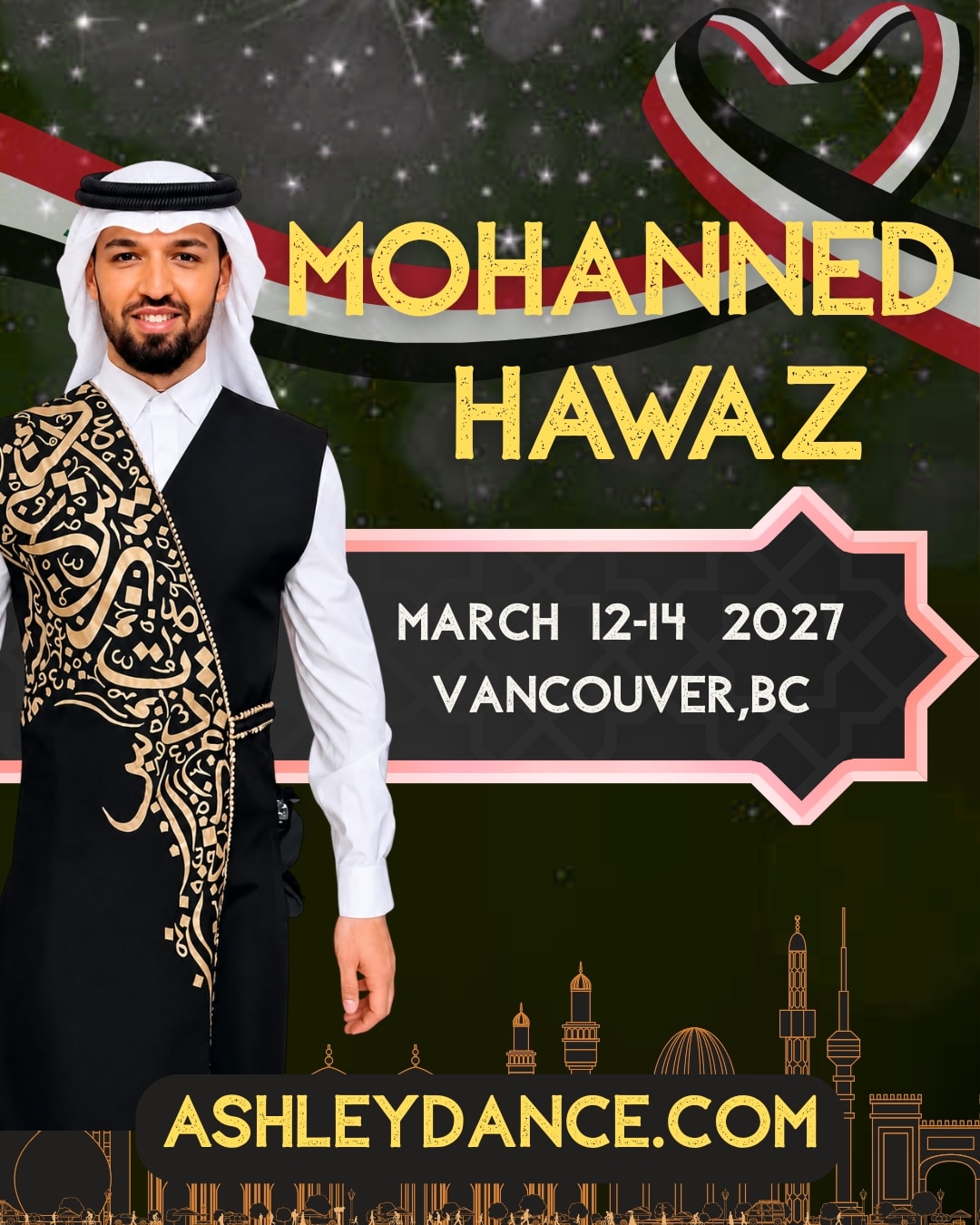
Mohanned Hawaz Returns to Vancouver 2027
10 hours of Iraqi Dance Training, Education and Choreography
TBC: All workshops are held at Arts Club Theatre Society Studio “A” 162 West 1st Avenue Vancouver, BC V5Y 0H6
Schedule:
6:30pm – 9:30pm
This piece explores the rural environment of Southern Iraq, drawing particular inspiration from the marsglands (the Ahwar) and the areas surrounding the city of Nasiriyah. The movement vocabulary and physical qualities of the piece were developed as an artistic attempt to evoke the distinctive rural spirit of southern Iraq and its particular cultural, social and movement characteristics. This piece is performed to the voice of renowned Iraqi singer Dakhil Hassan, one of the most prominent voices associated with traditional Iraqi singing, and is structured around the Maqsum rhythmic pattern as its framework.
Location: TBC
10:00am – 12:00pm: Al-Hajaa Training & Technique inc. knives
1:00 – 3:00pm: Al-Hajaa Choreography
Sunday July 19 2026: Iraqi Kawliya Dance
11:00am – 2:00pm
NEW CHOREOGRAPHY! Iraqi Kawliya Dance is a traditional Iraqi folk dance historically associated with the Kawliya communities who lived in various regions of Iraq, particularly in Baghdad and southern Iraq. The dance is characterized by fast-paced movements, strong rhythms, and expressive body language, with a particular emphasis on shoulder movements, head motions, and footwork, as well as facial and bodily expressions.
Kawliya Dance reflects:
• Joy, energy, and vitality
• Direct interaction with music
• The festive and social spirit of Iraqi culture
It is traditionally performed to Iraqi folk music and is considered an important part of Iraq’s intangible cultural heritage, combining dance, music, and cultural expression.
Location: TBC
In Mohanned’s teaching of this dance style, he focuses on:
• Proper technical foundations of the movements
• Understanding musical rhythm
• Preserving the authentic cultural identity while presenting it in a contemporary and respectful way suitable for international performances and festivals
Payment
Funds are in CDN dollars. If you are in Canada, then an etransfer to ashley@ashleydance.com can be sent. If you are from outside Canada, please send via PayPal as ‘FRIENDS & FAMILY ONLY‘ (payment may be sent back if not sent as thus) to kirkham_ashley@yahoo.ca Please include your full name & the workshop/s you are registering for in the memo. Once your payment has been received then your registration will be confirmed.
No refunds are available however transferring payment to another participant will be allowed.
About Mohanned Hawaz
Mohanned Hawaz is an award-winning Iraqi-Swedish dance artist and choreographer with a distinguished background in both contemporary and traditional Iraqi dance. He is internationally recognized for his contributions to preserving and presenting Iraqi folk culture on prestigious stages around the world. As a respected dance instructor and choreographer, he is highly sought-after in the global Middle Eastern dance community for his deep knowledge of Iraqi dance forms.
Born in Mosul, Iraq, Mohanned began performing at local festivals at the age of seven. By fifteen, he joined the Iraqi Artists Union of Nineveh, where he received formal training in dance, costuming, and stage makeup. A key influence in his early training came from Hanaa Abdullah, a pioneering figure in Iraqi folk dance and a founding member of the Iraqi National Folklore Troupe in 1971. Hanaa Abdullah, who had previously been a member of the Al-Rasheed Folk Troupe since 1965, is widely regarded as one of the most influential figures in preserving and shaping Iraq’s folkloric dance heritage—and she remains Mohanned’s foremost mentor and artistic guide.
In 2006, Mohanned moved to Egypt to study contemporary dance with the legendary choreographer Walid Aouni at the Cairo Opera House. Later, he relocated to Sweden and continued his contemporary dance studies at Löftadalens Folkhögskola under the supervision of renowned Swedish choreographer Lena Cederwall Broberg.
After completing his studies, Mohanned founded the Enkidu Dance Company—the first company to present authentic Iraqi folk dance on the Swedish national stage. Enkidu has since toured more than 30 countries, showcasing Iraq’s rich dance heritage and earning numerous international awards.
In 2023, Mohanned and his company represented Iraq at UNESCO’s 75th Anniversary of Iraq’s Membership, in a historic performance in Paris. The show was held in partnership with the Iraqi Ministry of Culture, the Iraqi Traditional National Orchestra led by Maestro Alaa Majeed, and featured the renowned oud player and UNESCO peace ambassador Naseer Shamma.
In 2023, Mohanned was officially commissioned by the Iraqi Ministry of Culture to conduct a nationwide field research project across all provinces of Iraq. The goal was to document traditional Iraqi dances and create choreographed pieces inspired by the authentic heritage of each region. This marked one of the most significant national efforts in Iraqi dance documentation since the 1970s, solidifying Mohanned’s role as a cultural authority in Iraqi folkloric arts.